
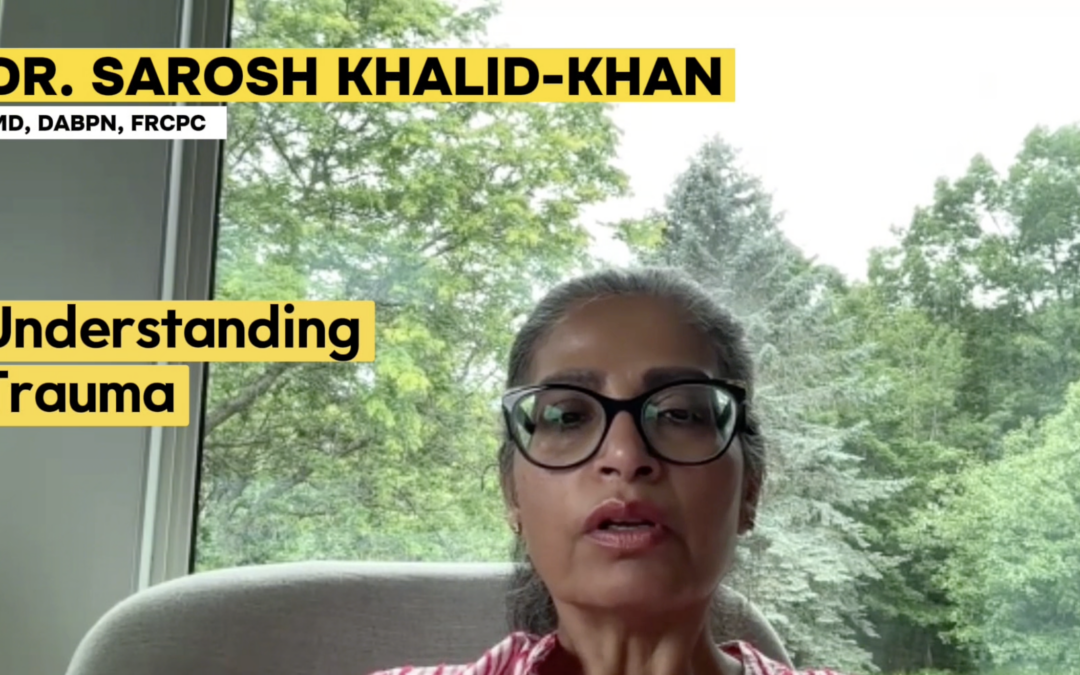
How Experiences Affect the Nervous System Over Time
A frontline worker, Daniel, meets with a client named Amir in a community mental health counselling follow-up session following a referral from a primary care provider.
Amir attends a follow-up appointment after being referred from another service. He is alert and cooperative at the start of the conversation, but becomes noticeably quieter when the discussion shifts toward past experiences. At certain points, he pauses for long periods before responding, and his attention seems to shift away from the present moment.
The worker notices a change in tone and engagement, but there is no single clear trigger in the room. It feels more like the conversation itself is bringing something forward that is difficult to stay present with.
In moments like this, what may be showing up is not only stress, but the longer-term impact of experiences that have overwhelmed a person’s ability to cope at the time they occurred.
What Trauma is
Trauma is not defined only by the event itself, but by how it is experienced. It occurs when a situation or series of situations overwhelms a person’s ability to process or cope with what is happening.
Two people can go through similar experiences and respond very differently. The difference often depends on factors such as support, safety, timing, and previous exposure to stress or adversity.
In Amir’s case, Daniel becomes aware that certain topics shift his engagement significantly, even when the conversation is approached gently. His responses become shorter, and he appears less anchored in the present moment.
Trauma is commonly associated with events such as violence, loss, or serious threat. It can also develop through ongoing experiences such as chronic instability, systemic discrimination, or repeated disruptions to safety and support.
How Trauma Affects the Nervous System
When someone experiences something overwhelming, the nervous system responds in ways that are designed to protect them. These responses are automatic and not consciously controlled.
In some cases, the nervous system remains in a heightened state of alertness even after the immediate situation has passed. In other cases, individuals may feel emotionally shut down, disconnected, or numb. Many people move between these states depending on context and triggers.
During Amir’s appointment, Daniel notices that his attention shifts away during parts of the conversation related to past events, with longer pauses and reduced verbal response.
These responses are adaptations that develop in response to overwhelming experiences. They are not signs of weakness or lack of effort.
How Trauma Shows Up in Everyday Interactions
Trauma does not always present in direct or obvious ways. In frontline settings, it is often seen through patterns of behaviour, communication, and engagement.
Some individuals may appear highly sensitive to certain topics or become overwhelmed during conversations that feel intrusive or unfamiliar. Others may struggle with trust in systems or providers, especially in structured or formal settings.
Amir demonstrates this through changes in engagement depending on the subject matter. When the conversation stays present-focused, he is engaged, but when it shifts to past experiences, he becomes quieter and less responsive.
There may also be challenges with consistency, follow-through, or emotional regulation. Some individuals may withdraw entirely, while others may respond with urgency or frustration when feeling unsafe or overwhelmed.
These responses are often better understood as protective adaptations rather than isolated behaviours.
Trauma in Frontline Populations
Many individuals accessing frontline services have been exposed to experiences that may contribute to trauma. This can include refugees, newcomers, individuals experiencing homelessness, people involved in child and family services, and those accessing community health supports.
This does not assume that every person has experienced trauma in the same way. Rather, it highlights the importance of trauma-informed awareness in understanding behaviour and engagement.
For Daniel, this awareness helps contextualize Amir’s shifts in attention and engagement during the appointment, particularly when discussing sensitive or emotionally loaded experiences.
Recognizing the possibility of trauma supports more careful interpretation of responses and reduces the risk of misreading distress as resistance or non-compliance.
Why This Matters in Practice
Frontline workers are often meeting people where the impact of past experiences is still present. Understanding trauma in context supports more grounded and consistent responses in these interactions.
For Daniel, this means adjusting pacing and allowing space when Amir becomes quieter, rather than interpreting silence as disengagement.
It helps shift attention away from behaviour alone and toward what may be influencing that behaviour. This can improve communication, reduce misunderstanding, and support more stable engagement over time.
It also supports shared understanding across teams, which is important in environments where multiple workers may be supporting the same individuals.
Summary
Trauma refers to the impact of experiences that overwhelm a person’s ability to cope at the time they occur. These experiences can shape how the nervous system responds long after the event itself, influencing emotions, behaviour, and engagement with others.
In Amir’s case, changes in engagement during conversation reflect how certain topics can activate protective responses linked to past experiences.
In frontline settings, trauma often appears indirectly through patterns of withdrawal, heightened sensitivity, difficulty trusting systems, or emotional overwhelm. Understanding these responses in context supports more consistent, informed, and trauma-aware practice across services.